The complete guide to Jammu & Kashmir's certified GI-Tagged Ramban Sulai Honey and pure White Acacia. Botanical sources, health benefits, crystallization science, and purity tests.
Why High-Altitude Himalayan Honey is Globally Unique
High-altitude honey harvested in the pristine mountain belts of Jammu & Kashmir represents one of the purest botanical superfoods on earth. Unlike commercial agricultural honey from monoculture crop fields contaminated by chemical synthetic fertilizers and pesticides, Kashmiri mountain honey is harvested in untouched high-altitude forests (5,000 to 9,000 feet above sea level). The pristine alpine air, sub-zero winters, and dense wild botanical biodiversity yield raw honeys rich in living diastase enzymes, bio-flavonoids, and organic pollen grains. Because Kashmir Essence never pasteurizes, micro-filters, or blends its honey with industrial corn or rice syrups, every jar remains 100% raw, unheated, and biologically alive.
The Prestigious Ramban Sulai Honey GI Tag (Geographical Indication)
In recognition of its singular geographical terroir and botanical rarity, Ramban Sulai Honey was officially conferred the coveted Geographical Indication (GI) Tag by the Government of India (GI Application No. 470). Harvested across the steep mountain forests of the Ramban, Banihal, and Batote valleys, this rare monofloral honey is produced exclusively when honeybees forage on the delicate blossoms of Plectranthus rugosus (locally celebrated as 'Sulai' or wild mountain lavender). The shrub blooms for only 3 to 4 weeks in late summer, creating an extraordinarily limited annual harvest. The honey was famously selected by the Government of India as an official state gift presented to Queen Elizabeth II during her state visit, cementing its global pedigree as India's premier organic artisan honey.
Color, Aroma, and the White Crystallization Phenomenon
Freshly extracted Ramban Sulai honey has a luminous, translucent pale gold to light amber appearance with a captivating herbaceous aroma reminiscent of wild thyme, mint, and mountain lavender. Its flavor profile is gently floral with a clean, smooth, velvety sweetness and zero cloying aftertaste. A key hallmark of genuine raw Sulai honey is its natural, rapid crystallization: due to its balanced natural glucose-to-fructose ratio and abundance of microscopic natural pollen grains, it transforms in cooler temperatures into a luscious, pure white, butter-like spread. While uneducated supermarket shoppers mistakenly confuse crystallization with sugar adulteration, knowledgeable connoisseurs celebrate this creamy white texture as absolute physical proof that the honey is raw, cold-extracted, and unheated.
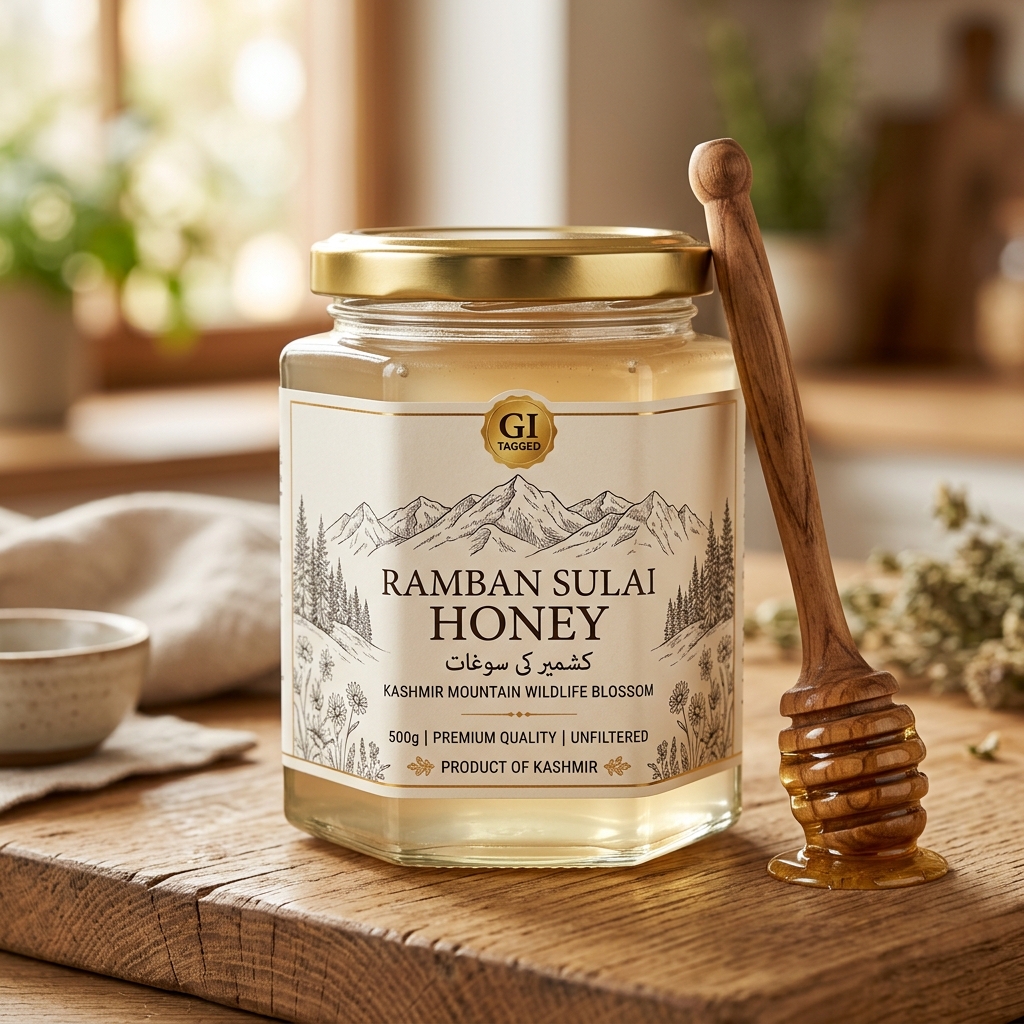 GI Tagged
GI-Tagged (Sulai Honey) · Raw & Cold Extracted
Ramban Sulai Honey (GI-Tagged) — 500g
Origin: Ramban & Banihal, Jammu & Kashmir · Harvest: August – September
Officially GI-Tagged Ramban Sulai Honey in a 500g jar. Harvested by honeybees foraging exclusively in the wild Sulai (Plectranthus rugosus) shrub forests of the Ramban and Banihal valleys in Jammu & Kashmir. This rare honey is unpasteurized, cold-filtered, and raw, keeping all pollen and natural enzymes intact. Famous for its light gold color, creamy texture, and distinct medicinal, throat-soothing benefits in traditional Himalayan medicine, this 500g jar is a rare find.
₹1499₹1999Save 25%
Inclusive of all taxes
Kashmiri White Acacia Honey: The Low-GI Liquid Gold
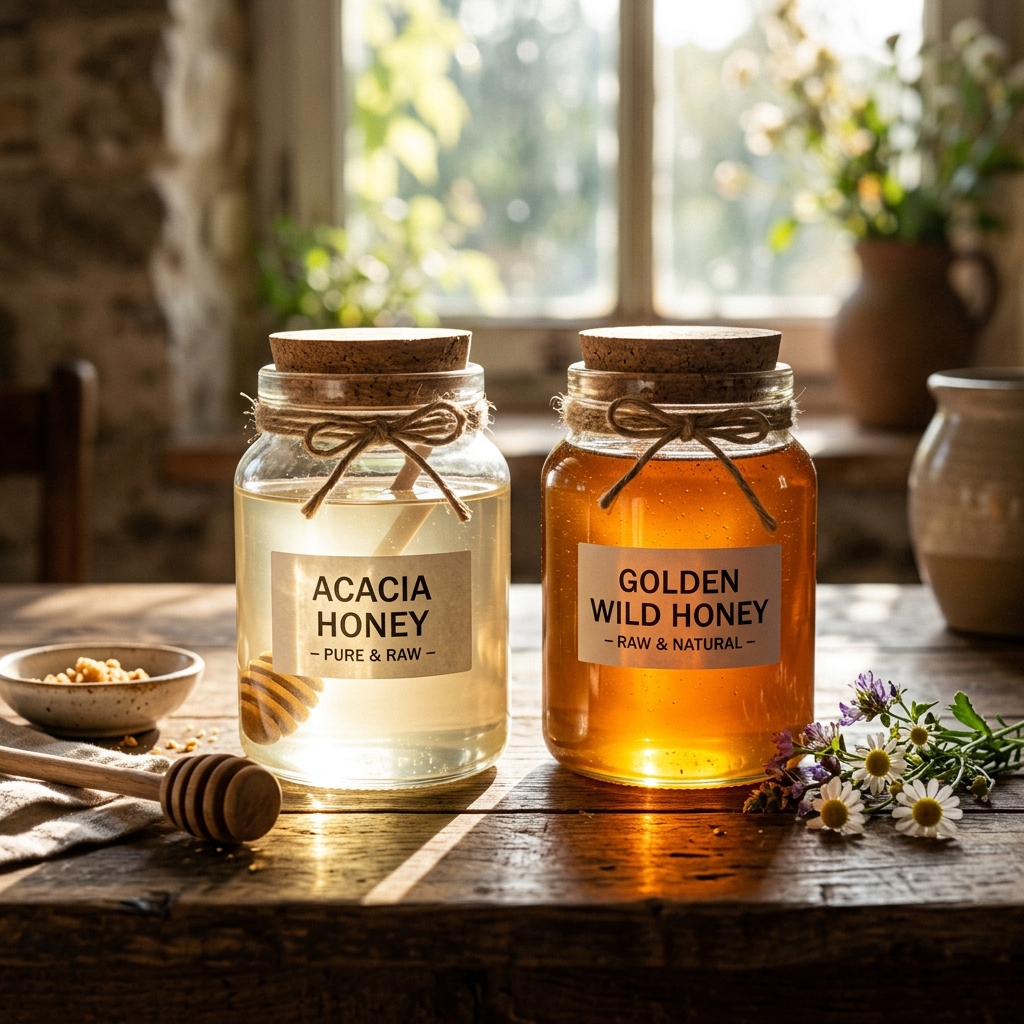
Harvested in early spring when the Robinia pseudoacacia (Black Locust) trees burst into fragrant white blossoms across the slopes of the Kashmir Valley, Kashmiri Acacia honey is globally famous for its astonishing glass-clear, water-white transparency. Acacia honey possesses an exceptionally high natural fructose content and low glucose level, giving it a remarkably low Glycemic Index (GI). As a result, pure Acacia honey rarely crystallizes and remains in a perfect, crystalline liquid state for years at room temperature. It delivers a gentle, mild, nectar sweetness with subtle vanilla notes that make it ideal for delicate herbal infusions, Kashmiri Kahwa, or natural sweetening without masking original flavors.
Therapeutic & Antimicrobial Health Properties
Both Ramban Sulai and Kashmiri Acacia honeys have served as pillars of classical Unani and Ayurvedic respiratory medicine for generations:
1. Natural Respiratory Relief: The volatile monoterpenes and flavonoids transferred from Plectranthus rugosus blossoms endow Sulai honey with potent antitussive and demulcent properties, calming stubborn bronchial coughs and soothing inflamed mucous membranes.
2. Enzymatic Antimicrobial Action: Raw unheated honey generates trace levels of hydrogen peroxide through glucose oxidase enzymes, giving it robust antibacterial efficacy against common pathogens.
3. Prebiotic Gut Support: Natural oligosaccharides feed beneficial Bifidobacteria and Lactobacillus colonies in the human gut microbiome.
4. Cellular Antioxidant Defense: Enriched with caffeic acid, quercetin, and chrysin that neutralize free radicals caused by pollution and oxidative metabolic stress.
Home Authenticity Tests: How to Detect Fake Supermarket Syrups
Over 80% of commercial supermarket honey brands fail modern nuclear magnetic resonance (NMR) purity testing due to blending with inverted rice, corn, and cane syrups. Test your honey at home with these three physical benchmarks:
1. The Cold Water Dispersal Test: Gently drop a teaspoon of honey into a transparent glass of cold water. Pure raw honey is dense and coherent; it will plunge directly to the bottom as an intact bead without dispersing, requiring vigorous stirring with a spoon to dissolve. Syrup-adulterated honey immediately dissolves and clouds the water.
2. The Flame Test: Lightly coat the tip of a dry cotton matchstick or wooden toothpick in honey and flick a lighter. Pure raw honey has low water content (<18%) and will ignite smoothly. Moisture-laden diluted honey will sputter or fail to light.
3. The Blotting Paper Test: Drop honey on a porous paper napkin. Pure raw honey remains bead-like on top for minutes; adulterated honey with artificial water or syrup absorbs immediately, forming a wet ring.