
GI-Tagged · ISO 3632 Category I
Kashmiri Saffron
The finest saffron in the world — GI-tagged by the Government of India, grown in Pampore at 1,600m altitude.
Order on WhatsApp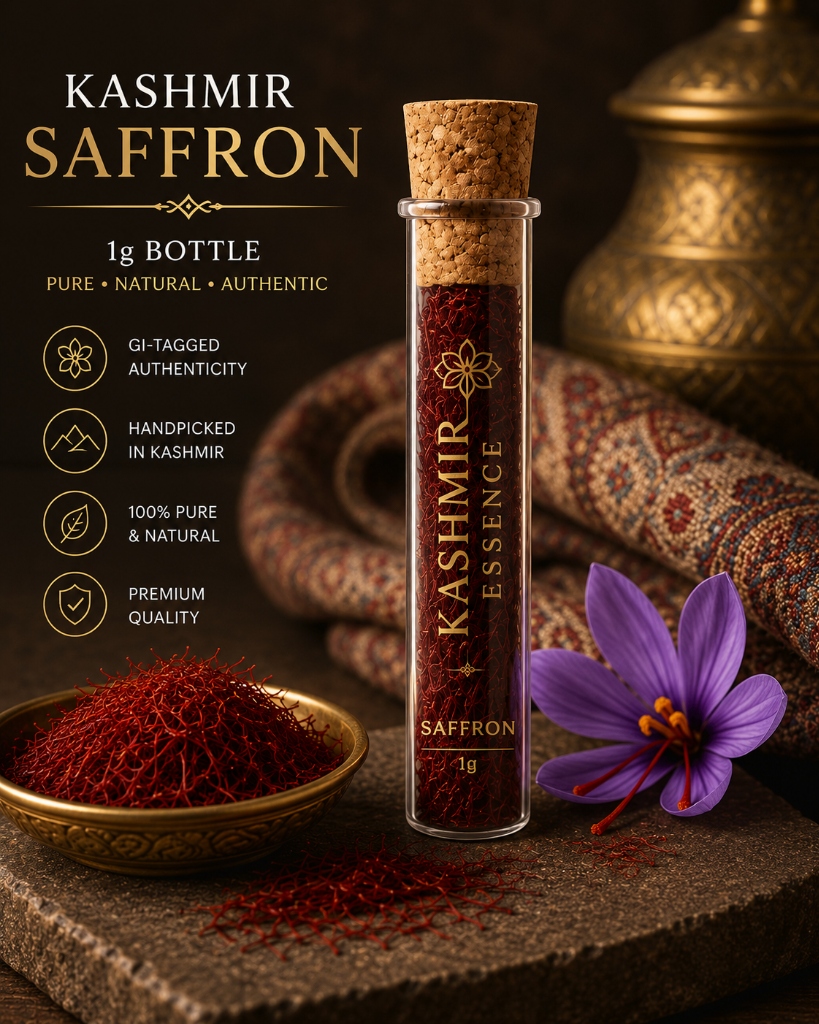 GI Tagged
ISO 3632 Category I
Kashmir Saffron (GI-Tagged) — Mongra Grade (1g)
1g premium glass vial
Best ValueISO 3632 Category I Verified
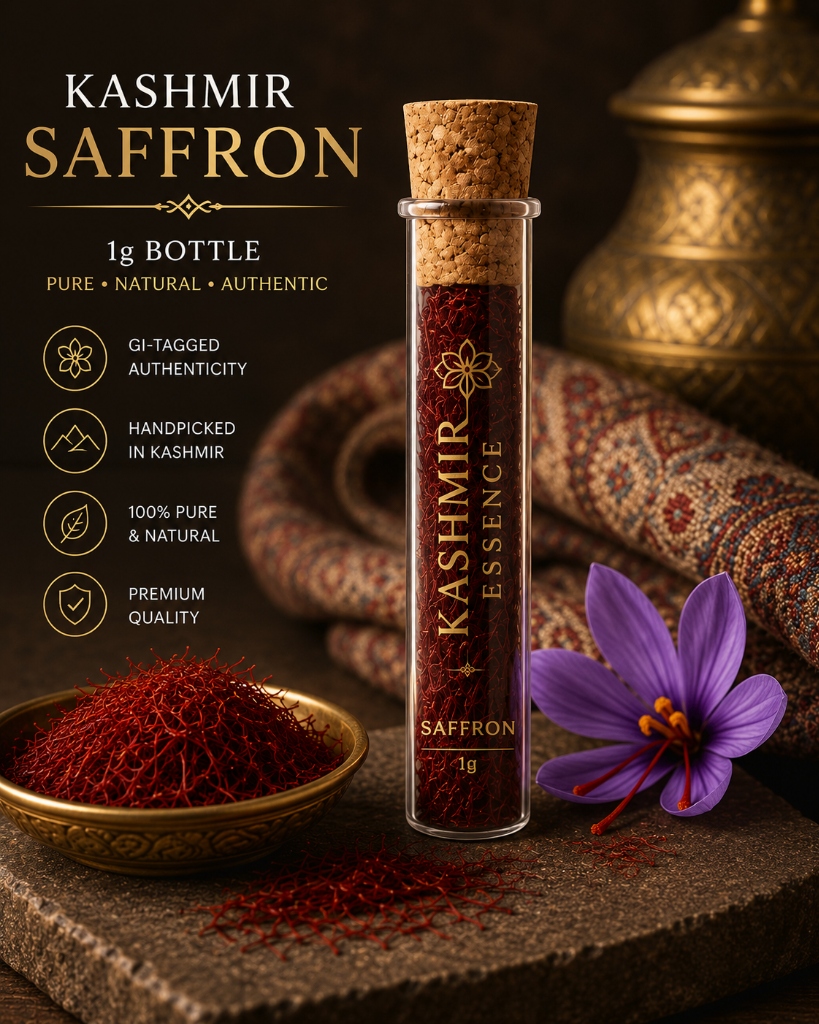
Kashmir Saffron (Premium)— Mongra Variety (1g)
1g premium glass vial
 Traditional Grade
ISO 3632 Category I
Kashmir Saffron — Lacha Grade (2g)
2g traditional glass vial
 Gift Edition
GI-Tagged · ISO 3632 Category I
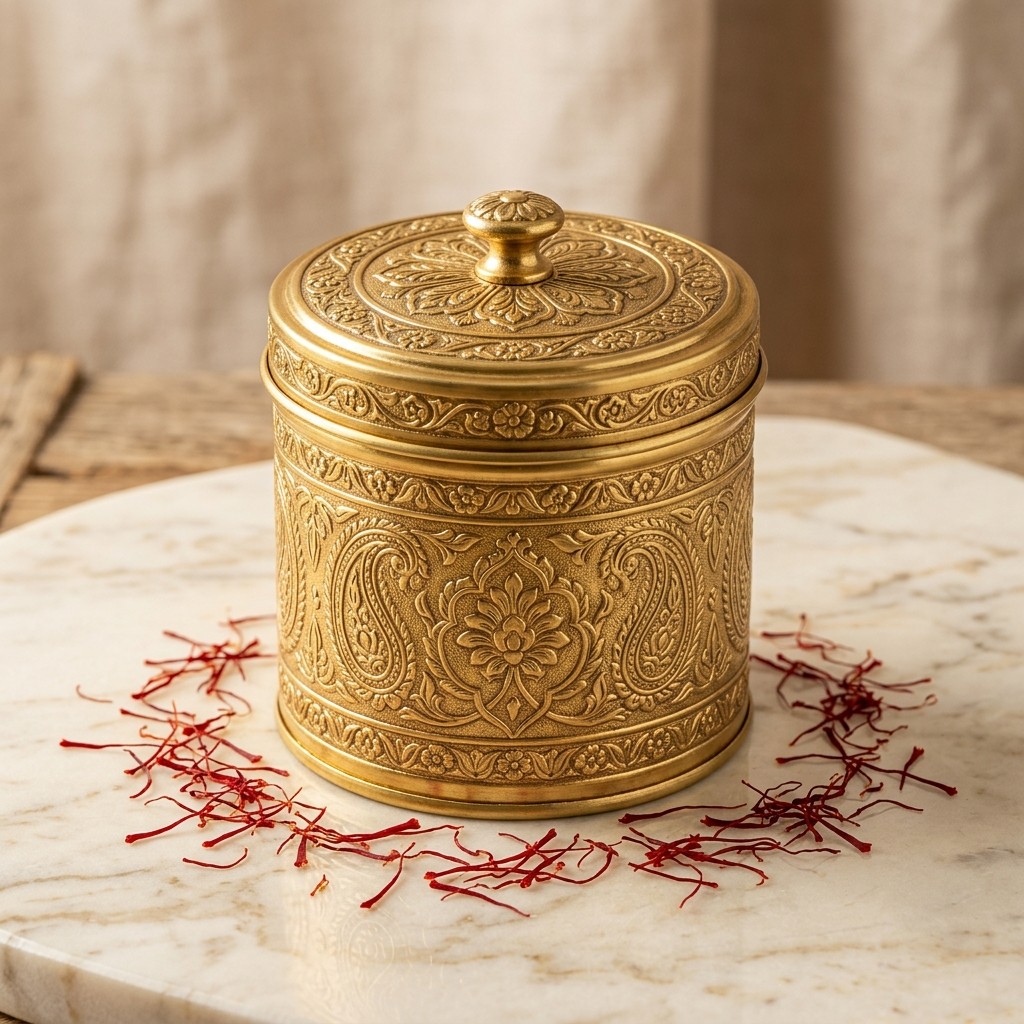
Kashmir Saffron Gift Tin — 5g
5g luxury tin
The King of Spices: Authentic Kashmiri Mongra & Lacha Saffron
Kashmiri saffron is widely recognized by culinary experts and researchers as the finest saffron in the world. Sourced from the ancient town of Pampore in Jammu & Kashmir, our saffron holds the prestigious Geographical Indication (GI) Tag, certifying its unique origin, climate, and quality. Due to the high altitude (1,600m+) and rich Karewa soil, Kashmiri Saffron contains exceptional concentrations of crocin (color potency), safranal (aroma), and picrocrocin (flavor profile), far exceeding international standards.
Why Kashmir Saffron Outclasses All Global Varieties
ISO 3632 Category I Certified
Consistently tests for crocin (color intensity) at levels between 240 and 270, well above the international standard threshold of 220 for Category I.
100% Pure Mongra Stigmas
Our Mongra grade contains only the thickest, deep-crimson stigma tips, carefully detached by hand, with zero yellow styles or filler materials.
Official GI Tag Protected
Every batch is sourced from registered farms in Pampore, Srinagar District, ensuring authentic geographical origin under government authority.
Understanding Saffron Grades: Mongra vs. Lacha vs. Iranian
Saffron quality is determined by the portion of the flower harvested. The saffron crocus (Crocus sativus) has a three-pronged red stigma connected to a yellow stalk (style). The red stigma contains the active chemical components: crocin (color), picrocrocin (flavor), and safranal (aroma).
- Kashmiri Mongra Saffron: This is the highest grade. It consists solely of the dark crimson-red stigma tips. It is hand-picked and separated, resulting in maximum potency and an intense, earthy aroma.
- Kashmiri Lacha Saffron: This is the traditional grade. It includes the red stigmas along with the attached yellow styles. While Lacha has slightly lower crocin concentration by weight compared to Mongra, it offers a beautifully complex flavor and is favored for traditional recipes.
- Iranian Saffron (Sargol/Negin): Often marketed as Kashmiri, Iranian saffron is grown on massive commercial scales. It has thinner threads, lower crocin readings (usually 180-220), and a milder, less complex aroma compared to high-altitude Kashmiri saffron.
The Science of Saffron: Crocin, Safranal, and Picrocrocin
Saffron's medical and culinary properties are driven by three bio-active compounds. Crocin is the water-soluble carotenoid pigment responsible for the vibrant yellow-golden hue saffron imparts. Safranal is the volatile oil that gives saffron its unmistakable hay-like, sweet-floral aroma. Picrocrocin is the glycoside responsible for the slightly bitter, warm flavor. Because Kashmir's climate features freezing winters and hot, dry summers, the saffron crocus develops high concentration of these active metabolites to survive, creating a naturally superior spice.
How to Cook with Saffron to Maximize Color & Aroma
Never throw saffron threads directly into hot oil or boiling water, as extreme heat destroys the volatile compounds. To extract the full color and aroma, always pre-soak the threads. Warm 2-3 tablespoons of water, milk, or broth (approx 50-60°C). Add a pinch of saffron threads (8-10 threads per dish) and steep for 15 to 20 minutes. The liquid will turn a deep golden hue, and the threads will expand. Pour this infusion into your dish during the final stages of cooking.
Sourcing Journey: Harvest to Delivery
We trace every single gram back to its origin. Here is how we harvest, refine, and test our products.
October Harvest
Flowers are hand-picked at dawn during the short 2-week blooming window in Pampore's Karewa fields.
Manual Separation
Artisans carefully separate the red stigmas from the petals and yellow styles within hours of picking.
Traditional Drying
Dried in temperature-controlled rooms to preserve moisture levels below 10%, locking in volatile oils.
ISO Lab Testing
Every batch is tested for crocin, safranal, and moisture content to ensure Category I classification.