🔥 100% Authentic GI-Tagged Saffron   ·   Free Shipping on orders over ₹2000   ·   Direct from Kashmir Farmers 🚀   ·   Ships Worldwide in 5-14 days   ·   🔥 100% Authentic GI-Tagged Saffron   ·   Free Shipping on orders over ₹2000   ·   Direct from Kashmir Farmers 🚀   ·   Ships Worldwide in 5-14 days   ·   🔥 100% Authentic GI-Tagged Saffron   ·   Free Shipping on orders over ₹2000   ·   Direct from Kashmir Farmers 🚀   ·   Ships Worldwide in 5-14 days   ·  
Kashmir Essence
KashmirEssence
Order on WhatsApp
Home/Blog/What is Kashmiri Saffron? The Complete 2024 Guide
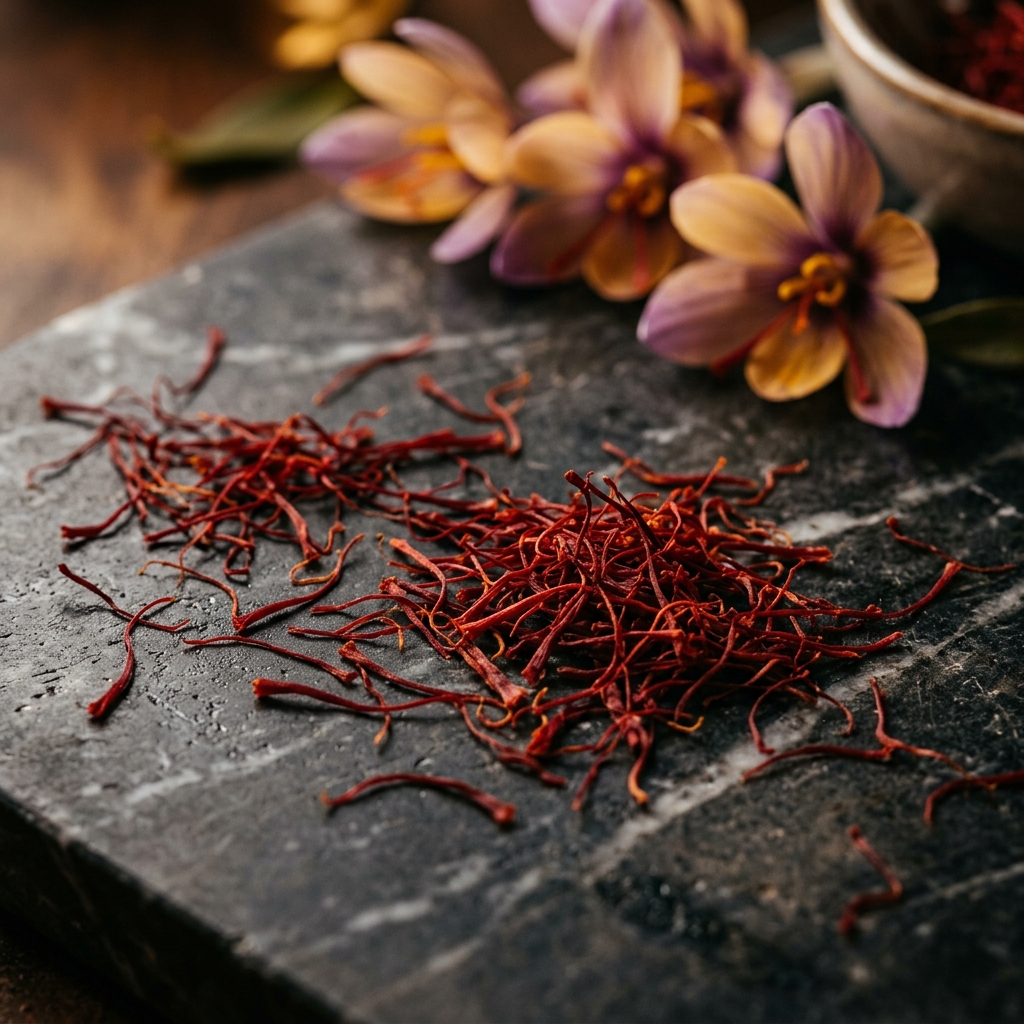
Authentic Kashmiri saffron threads on dark slate
9 min read·1 November 2024·saffron

What is Kashmiri Saffron? The Complete 2024 Guide

Everything you need to know about GI-Tagged Kashmiri saffron — how it grows in Pampore, what makes Mongra and Lacha grades different, ISO 3632 certification, and how to spot fakes.

What is Kashmiri Saffron?

Kashmiri saffron (Crocus sativus) is grown exclusively in the Karewa plateau of the Kashmir Valley, primarily in Pampore — a town 13km southeast of Srinagar known globally as the 'Saffron Town of India'. It is the only saffron in India to hold a Geographical Indication (GI) tag, awarded by the Government of India in 2020 under the GI Act. This certification means that only saffron grown in the specific agro-climatic conditions of the Kashmir Valley — the altitude (1,585–1,800m above sea level), the alkaline-clay Karewa soil, the freezing winters, and the warm summers — can carry the name 'Kashmiri Saffron'. For the highest grade, check our GI-Tagged Kashmiri Saffron Mongra.

Mongra vs Lacha: What's the Difference?

Kashmiri saffron is sold in two primary grades. Mongra (also spelled Mongral or All Red) consists only of the dark crimson stigma tips of the saffron crocus flower. These are the actual saffron threads, dried carefully to preserve maximum crocin (colour), safranal (aroma), and picrocrocin (taste). Mongra is the highest-grade saffron in the world. Lacha saffron includes the stigma along with the attached yellow-orange style — the stalk connecting the stigma to the flower. This gives Lacha a slightly lower crocin content than Mongra but is still certified Category I under ISO 3632. You can buy the authentic full-thread Kashmiri Saffron Lacha directly from our online store.

ISO 3632 Certification — What It Means
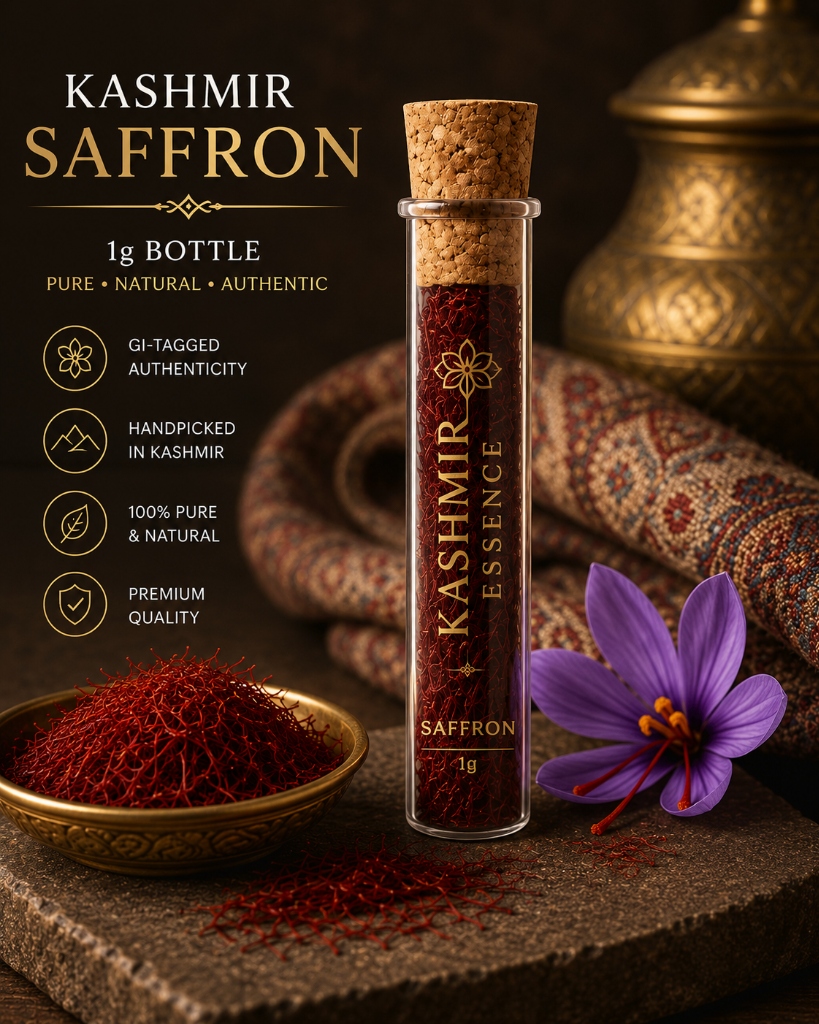
ISO 3632 is the international standard for saffron quality, measuring three active compounds: Crocin (colour/pigment) — minimum 220 absorbance units for Category I. Safranal (aroma) — 20–50 absorbance units. Picrocrocin (taste/bitterness) — minimum 70 absorbance units. Kashmiri saffron regularly tests at 250–280 for crocin — significantly above the Category I minimum. Spanish saffron (La Mancha), by comparison, typically tests at 180–220. Iranian saffron varies but generally tests at 200–250. Our laboratory-verified batches are available in the Kashmir Saffron Mongra product collection.
Kashmir Saffron (GI-Tagged) — Mongra Grade (1g)GI Tagged

ISO 3632 Category I

Kashmir Saffron (GI-Tagged) — Mongra Grade (1g)

Origin: Pampore, Kashmir Valley · Harvest: October – November

This is our premium 1g pack of GI-Tagged Kashmiri Saffron (Mongra grade). Sourced directly from the harvest of Pampore, Kashmir, this saffron consists entirely of the deep crimson-red stigma tips, hand-picked and cleaned to ensure zero yellow style. Tested under ISO 3632 standards, our Mongra saffron delivers maximum coloring strength (crocin > 250), rich honey-like aroma, and potent therapeutic value. The 1g pack is perfect for personal daily culinary use, tea infusions, and family recipes. Free from additives, chemicals, or artificial dyes.
10501500Save 30%

Inclusive of all taxes

How to Identify Real Kashmiri Saffron

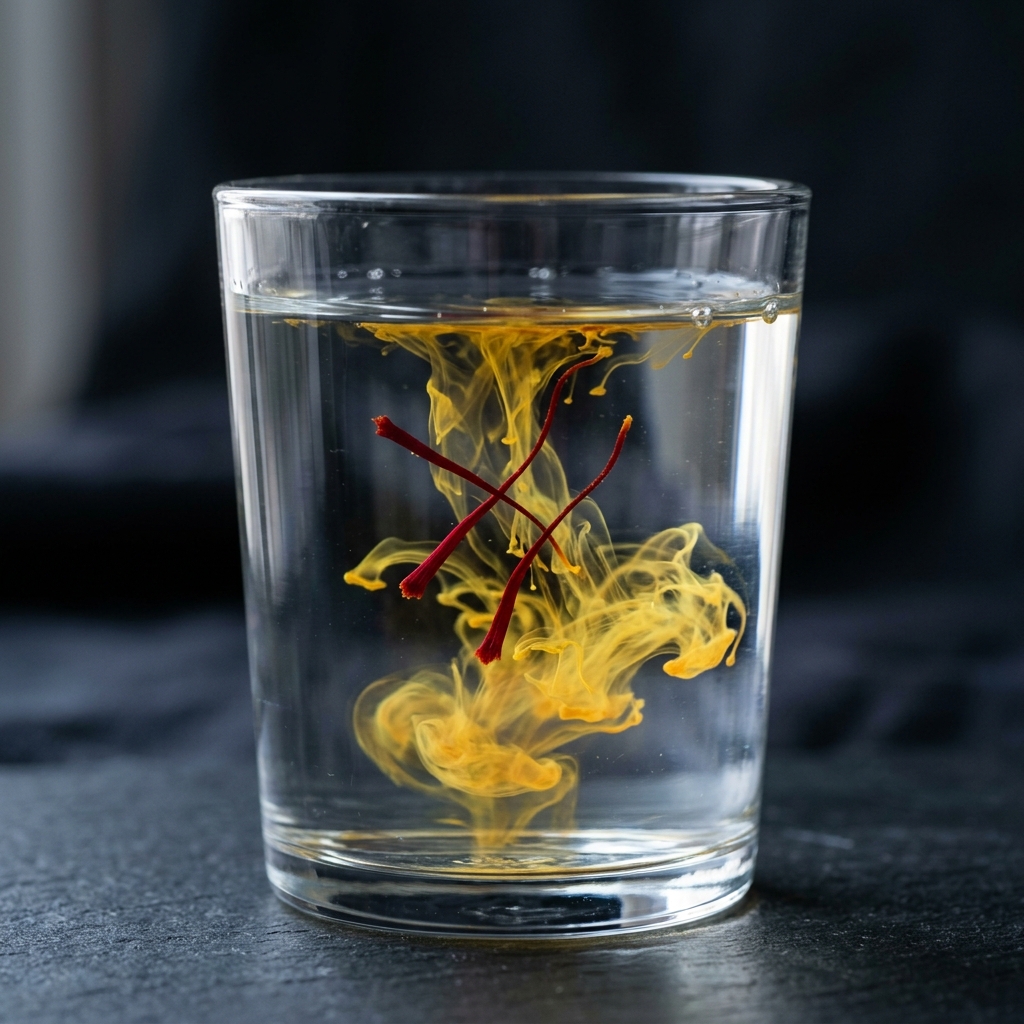
Authentic Kashmiri saffron has several distinguishing characteristics: The threads are trumpet-shaped at one end and thinner at the other (unlike Iranian saffron which is uniform). The colour is deep crimson-red, not bright orange. When placed in cold water, it turns the water golden-yellow within 5–10 minutes — a slower release than adulterated saffron. The aroma is intensely floral and slightly sweet — not chemical. The threads are dry and crisp, not damp or oily. Fake saffron (often dyed corn silk, safflower petals, or paper) releases colour immediately in water, indicating artificial dye.

How Kashmir Essence Sources Its Saffron

Kashmir Essence partners directly with GI-registered saffron growers in Pampore, Srinagar District. We purchase directly from the farmer — no wholesale markets, no middlemen. Every batch is lab-tested by an accredited laboratory for ISO 3632 compliance before it reaches you. We provide the lab certificate on request with every order.
Kashmir Saffron (GI-Tagged) — Mongra Grade (1g)GI Tagged

Featured Product

Kashmir Saffron (GI-Tagged) — Mongra Grade (1g)

This is our premium 1g pack of GI-Tagged Kashmiri Saffron (Mongra grade). Sourced directly from the harvest of Pampore, Kashmir, this saffron consists entirely of the deep crimson-red stigma tips, hand-picked and cleaned to ensure zero yellow style. Tested under ISO 3632 standards, our Mongra saffron delivers maximum coloring strength (crocin > 250), rich honey-like aroma, and potent therapeutic value. The 1g pack is perfect for personal daily culinary use, tea infusions, and family recipes. Free from additives, chemicals, or artificial dyes.
10501500Save 30%

Frequently Asked Questions

Is Kashmiri saffron the best in the world?+
Kashmiri saffron consistently tests at the highest crocin levels globally and is the only Indian saffron with a GI tag. Many culinary experts and scientists consider it the world's finest, though Spanish and Iranian saffron are also excellent choices for different uses.
Why is Kashmiri saffron so expensive?+
Saffron is the most expensive spice by weight because each stigma must be hand-picked from the crocus flower. Each flower produces only 3 stigmas, and it takes approximately 150–170 flowers to produce just 1 gram of saffron. Kashmir's short harvest window (2–3 weeks in October–November) further limits annual production.
How do I store Kashmiri saffron?+
Store saffron in an airtight container (preferably glass) away from light, heat, and moisture. A cool, dark cupboard is ideal. Properly stored, Kashmiri saffron remains potent for 2–3 years. Avoid storing in the refrigerator as condensation can damage the threads.
How much saffron should I use per dish?+
A pinch (8–10 threads or approximately 0.05–0.1g) is sufficient to flavour and colour a dish serving 4–6 people. Always steep the threads in 2–3 tablespoons of warm (not boiling) water or milk for 15–20 minutes before adding to the dish to maximise colour and flavour extraction.